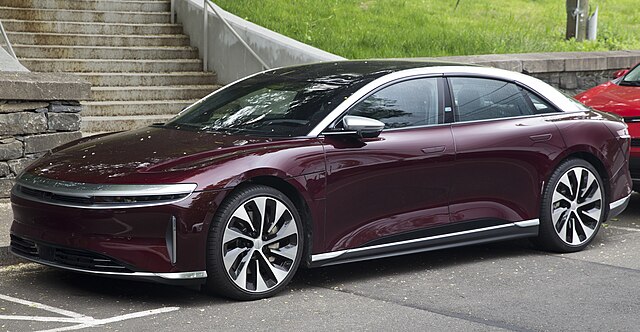
Q1 production and delivery gap
Lucid produced 5,500 vehicles in the first quarter of 2026 and delivered 3,093. The gap matters because the company linked February delivery softness to a seat supplier issue that affected Gravity timing before being resolved during the quarter.
Revenue reached $282.5 million, up from the prior year, while Lucid ended March with approximately $3.2 billion in liquidity. Management also pointed to an April capital package and expanded delayed-draw loan capacity that would lift pro forma liquidity to roughly $4.7 billion.
The operating question is no longer only whether Lucid can engineer high-end EVs. It is whether the company can convert inventory into deliveries, stabilize the supplier base, and use Gravity demand to improve factory absorption without overshooting retail pace.
Supplier issue and Gravity timing
The first-quarter production figure shows that the Arizona manufacturing system can run well above the delivery rate seen in the same period. That is useful only if the company can keep retail, fleet, and export channels moving at a similar pace. Otherwise, the production achievement becomes an inventory-management problem, tying up working capital at the same time that the company is funding the Gravity ramp and a future midsize platform.
Gravity is especially important because it changes Lucid's addressable market. The Air sedan proved the company's efficiency and powertrain credentials, but the luxury SUV segment gives Lucid a better chance to reach families, executive transport buyers, and premium customers who want cargo space without moving to a pickup or a full-size body-on-frame SUV. A seat-supplier interruption therefore has meaning beyond one month of deliveries: it tests whether Lucid's supplier-development process is ready for a higher-volume, more complex vehicle.
The April financing package also changes how investors should read the quarter. The added preferred stock, common-stock proceeds, Uber investment, and PIF-backed delayed-draw capacity reduce near-term liquidity pressure, but they do not remove the need for disciplined spending. Lucid's cash position buys time for execution; it does not substitute for repeatable production quality, predictable deliveries, and a clearer path to lower unit cost.
Liquidity and execution signal
Management's comment about aligning production with anticipated deliveries points to a more cautious posture. In a stronger EV demand environment, Lucid might have emphasized capacity expansion first. In the current market, the healthier signal would be a tighter link between order intake, build sequencing, logistics, and customer handover. That would help reduce discounting pressure and make each vehicle produced more likely to translate into recognized revenue.
The Uber investment adds another layer to the story. It suggests that Lucid's vehicle and software architecture may have value in premium autonomous or ride-hailing applications, but that opportunity is not immediate enough to carry the 2026 financial narrative. For now, the core proof point remains simpler: Gravity needs to arrive in customer hands reliably, with supplier defects contained before they interrupt monthly delivery cadence.
Taken together, Q1 was a reset rather than a clean acceleration quarter. Lucid showed stronger production capability and secured more liquidity, yet the delivery shortfall reminded the market that a premium EV maker is only as resilient as its supplier chain and order-conversion system. The next few quarters should reveal whether the February disruption was an isolated launch issue or an early warning about scaling complexity.
Source and editorial note
This AutoIntel Lab brief is an original rewritten analysis based on Lucid Group investor relations. It summarizes market implications and does not reproduce the source article body.