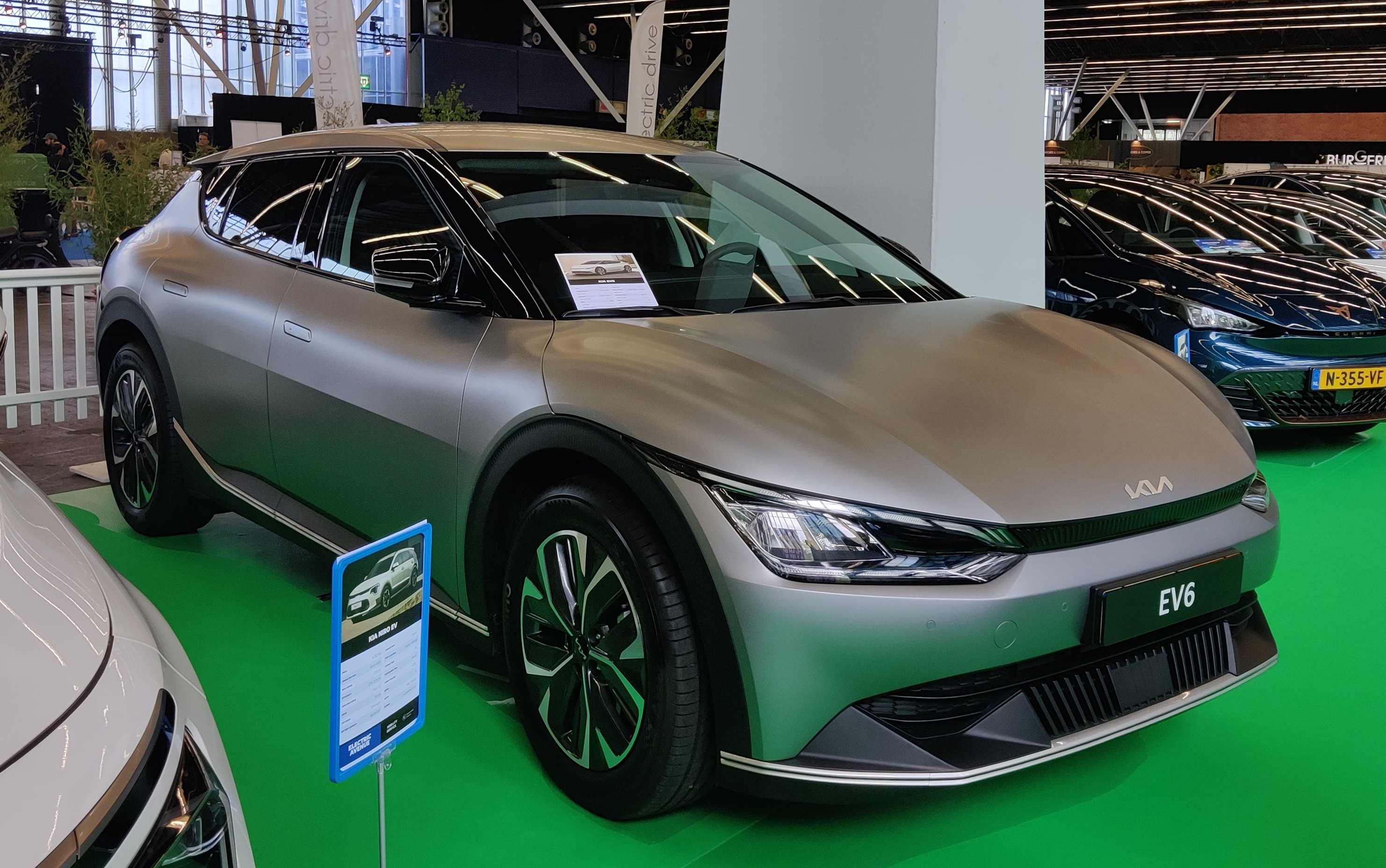

Lower entry price
Kia America announced 2026 EV6 pricing with the Light RWD trim starting at $37,900 before destination. The move shifts the EV6 story from model continuity to price accessibility.
The 2026 EV6 adds a dual-voltage charging cable across trims and a DC fast-charger adapter in ZEV states. These are small hardware details, but they speak directly to one of the remaining ownership frictions for mainstream EV buyers.
The EV6 now sits alongside the incoming EV3 as Kia works to broaden its electric lineup. The strategic point is clear: in a softer EV pricing environment, hardware maturity must be paired with a sharper transaction-price story.
Charging equipment changes
The new price ladder gives Kia more room to speak to different EV customers without asking each one to buy a near-luxury crossover. Light, Wind, and GT-Line trims now create a clearer path from value-oriented range shoppers to buyers who want higher equipment and all-wheel drive. That structure is important because EV shoppers increasingly compare monthly payments, charging convenience, insurance, and expected depreciation as much as headline range.
Kia's decision to include a dual-voltage charging cable is practical rather than flashy. Many households still begin EV ownership with limited home-charging preparation, and a cable that supports both 120-volt and 240-volt use reduces the sense that the vehicle requires an immediate infrastructure project. The DC fast-charger adapter in ZEV states also acknowledges the fragmented charging transition as automakers move toward broader compatibility with North American fast-charging networks.
The EV6 remains tied to the E-GMP architecture, which gave Hyundai Motor Group a strong early position in fast-charging mainstream EVs. By 2026, however, fast charging alone is no longer enough to define the product. Competitors have narrowed the range and charging gap, while price cuts and incentives have reset customer expectations. Kia's repositioning therefore turns a mature technology package into a value argument.
Positioning alongside EV3
The Georgia assembly note is part of that value story. U.S. assembly can support supply continuity, dealer confidence, and potential eligibility discussions around policy-driven incentives, even when trim-level details and sourcing rules still matter. For shoppers, the more immediate benefit is that Kia can present EV6 as part of a growing U.S. retail portfolio rather than an imported niche product.
The arrival of EV3 adds another layer of pressure. If EV3 becomes the lower-cost urban and compact option, EV6 has to justify itself through space, charging speed, performance, and a more refined crossover feel. Lower entry pricing helps prevent overlap from becoming a problem and lets dealers explain the lineup as a ladder rather than a set of competing EV nameplates.
This is why the 2026 pricing announcement reads like more than a normal model-year update. Kia is adapting to an EV market where early adopters have already bought, mainstream buyers are more payment-sensitive, and charging confidence remains uneven. The EV6 does not need to reinvent itself; it needs to feel easier to buy, easier to charge, and easier to place inside a household budget.
Source and editorial note
This AutoIntel Lab brief is an original rewritten analysis based on Kia America / PR Newswire. It summarizes market implications and does not reproduce the source article body.