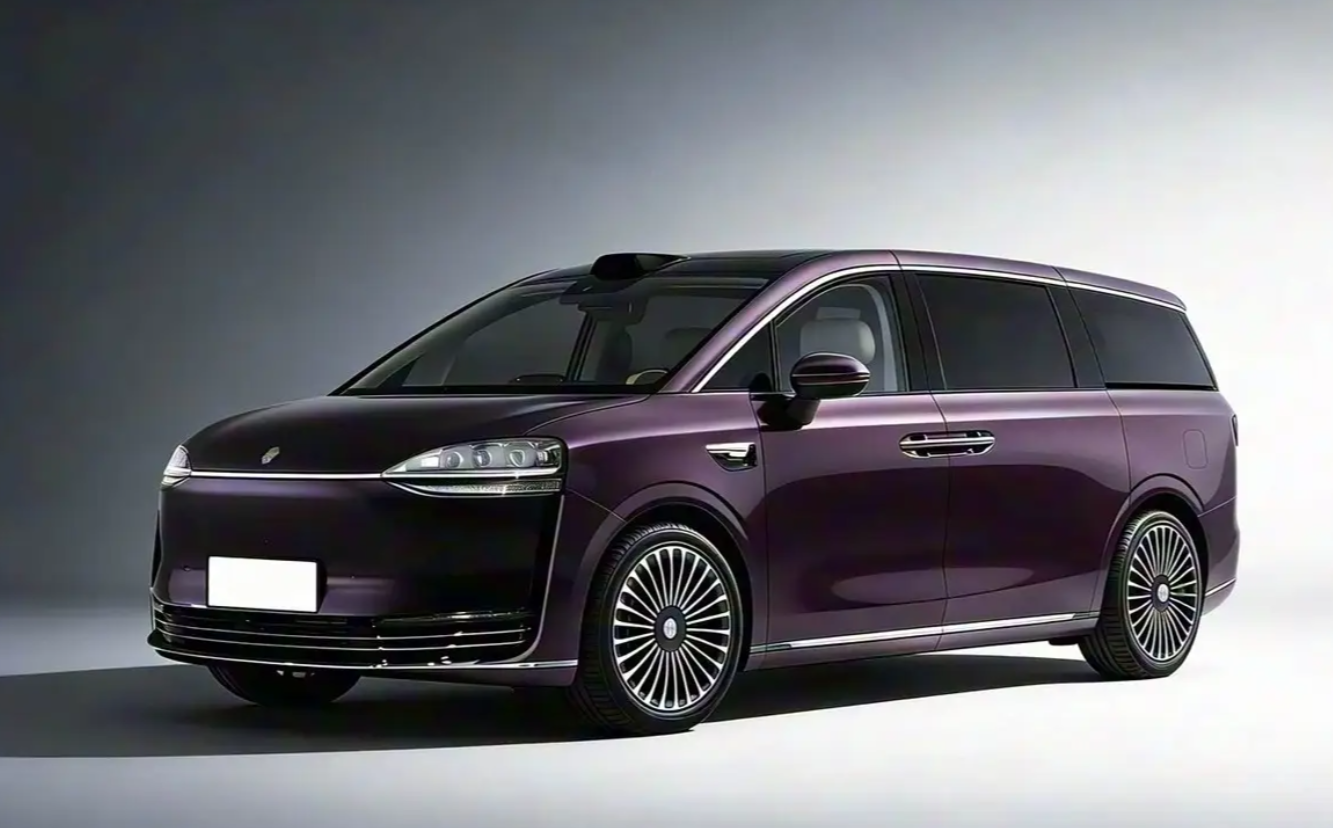
May 15 traffic jam
May 15 was the densest point in the user-provided launch list, covering Changan Eado, GAC Trumpchi M6, Zhijie V9, the vertically replaced Li L9, Beijing Off-road's BJ60 pair, Onvo L80, and Haval Raptor Plus. That breadth is important because it shows where Chinese brands still see room for meaningful volume: family transport, not only youth-oriented sedans or expensive halo EVs.
The price spread was equally telling. Entry-level sedans such as Eado remained below 11万元, while MPVs and larger technology-heavy SUVs pushed into the 30万元 to 50万元 range. That compresses multiple household use cases into one launch day, from budget commuting to premium multi-row transport.
Packaging over labels
Li L9 stood out because its update was framed as a vertical generation move rather than a normal trim addition. That suggests Li Auto wants to keep the flagship fresh without surrendering its identity as a software-rich, family-centered large SUV brand. In the current market, reputation alone is not enough; the product must keep feeling current in cabin technology and assisted-driving expectations.
Zhijie V9 and Trumpchi M6 show that MPVs remain strategically relevant, even as SUVs dominate the broader conversation. Chinese households, ride-hailing fleets, and executive-transport buyers still reward flexible second-row space and easier third-row access. That makes the MPV category a useful profit and differentiation zone rather than a legacy holdover.
Powertrain diversity survives
BJ60 and BJ60 range-extender variants add another layer. Their inclusion on the same day confirms that family-vehicle competition no longer happens in a single propulsion lane. Buyers can now move between conventional, hybrid-like, and extended-range solutions while keeping roughly the same body style and practicality expectations.
The deeper change is that body style is becoming less important than cabin mission. Brands are designing around how the second row feels, how strollers or luggage fit, how easily older family members can step in, and whether the vehicle can serve both daily commuting and holiday travel without friction.
Why the family segment stays strategic
That commercial logic keeps the family segment strategically attractive. It supports higher accessory mix, easier financing storytelling, and repeat purchase behavior because households revisit the category whenever family structure, school commute, or travel habits change.
The May 15 slate therefore reads like a packaging war. Cabin layout, seating logic, price architecture, and powertrain flexibility are all being used to defend position. In China's 2026 market, the family vehicle is not a dull category at all. It is where brands are trying to prove who understands household mobility best.
Source and editorial note
This AutoIntel Lab brief is an original rewritten analysis based on User-curated China launch list based on Sina Auto new-car calendar and CarNewsChina confirmations. It summarizes market implications and does not reproduce the source article body.