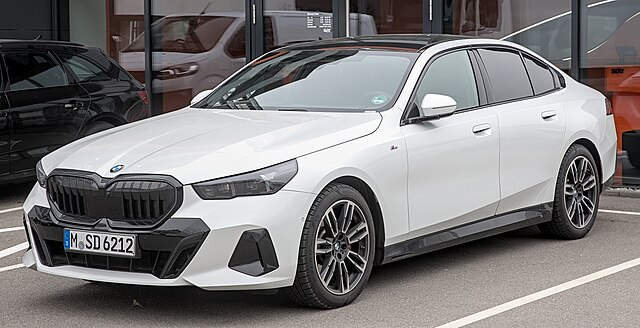
Two-millionth BEV milestone
BMW Group's two-millionth all-electric vehicle was a BMW i5 M60 xDrive sedan assembled at Plant Dingolfing. The milestone is less about a single model than the ramp pattern behind it.
Dingolfing began series BEV production in 2021 with the iX and now builds the iX, i5 sedan and touring, and i7. BMW says the site has already produced more than 320,000 all-electric vehicles since 2021.
For planners, the signal is flexibility. BMW continues to emphasize a technology-open production system, which helps plants adjust between BEV and other drivetrains as regional demand, incentives, and charging economics move at different speeds.
Dingolfing's BEV role
The milestone also shows how BMW has chosen to manage the transition differently from brands that split EV and combustion production into more separate industrial systems. At Dingolfing, the relevant capability is not only battery-electric assembly. It is the ability to sequence different drivetrains, body styles, and option mixes through the same operating discipline without treating electrification as a separate side project.
That matters because the BEV market is no longer moving in a straight line. China, parts of Northern Europe, and some premium urban markets continue to reward rapid electrification, while other regions are more sensitive to charging access, incentives, and residual values. A flexible plant lets BMW protect utilization when one drivetrain grows faster than expected or slows temporarily because of policy or customer economics.
Dingolfing's role is broader than final assembly. The site sits inside a production network that has had to learn battery-module handling, high-voltage safety, software calibration, and end-of-line testing while still building premium vehicles with traditional quality expectations. The more than 320,000 BEVs produced there since 2021 make the plant a learning center for the rest of BMW's operations, not merely a volume contributor.
Flexible manufacturing signal
The i5 M60 xDrive is also a telling choice for the two-millionth vehicle. It is not a small city EV or a compliance model. It is a performance-oriented executive sedan in a segment where BMW must defend brand identity while changing propulsion. That helps explain why the company keeps linking electrification to familiar product attributes such as driving dynamics, luxury equipment, and long-distance usability.
The next stage will test whether this flexible approach can scale with Neue Klasse products and more localized battery supply. If new architectures bring higher software content, improved efficiency, and different battery-pack designs, BMW will have to balance common manufacturing processes with sharper platform differentiation. The current milestone suggests the company wants evolution through network reuse rather than a sudden break with its manufacturing base.
For suppliers, BMW's message is equally clear. Components must support mixed production and fast regional adjustment, not only peak BEV volume. Battery systems, thermal modules, power electronics, interiors, and software validation processes all need to fit a production model where the plant may build several propulsion types in the same period. The two-millionth BEV is therefore a marker of industrial flexibility as much as electric-vehicle adoption.
Source and editorial note
This AutoIntel Lab brief is an original rewritten analysis based on BMW Group press. It summarizes market implications and does not reproduce the source article body.